Supercharge Your Cells: How SS-31 Builds on MOTS-c to Restore Energy, Fight Fatigue, and Slow Aging

SS-31: The Mitochondria-Targeting Peptide Revolution – From Lab Discovery to Real-World Biohacking (And Why Pair It with MOTS-c)
Mitochondrial health is at the forefront of longevity, energy optimization, and performance biohacking. As we age or push our bodies hard, mitochondrial dysfunction leads to fatigue, slower recovery, and metabolic issues. Enter SS-31 (elamipretide), a synthetic tetrapeptide that directly targets and protects mitochondria. Recently FDA-approved under the brand Forzinity for Barth syndrome (a rare mitochondrial disorder) in September 2025, SS-31 signals a shift from experimental to validated mitochondrial therapy.
For those already experimenting with MOTS-c—the exercise-mimicking peptide that boosts mitochondrial biogenesis—SS-31 offers complementary repair. This article walks through its origins, science, community experiences, dosages, and why stacking or sequencing with MOTS-c makes sense for deeper mitochondrial support.

Discovery and Development
SS-31’s story began serendipitously in the early 2000s. Dr. Hazel Szeto at Weill Cornell Medical College, collaborating with Dr. Peter W. Schiller at the Montreal Clinical Research Institute, was developing opioid peptide analogs. One compound (SS-02) unexpectedly crossed cell membranes and targeted mitochondria selectively.
This led to the Szeto-Schiller (SS) peptides class. SS-31 (D-Arg-dimethylTyr-Lys-Phe-NH₂, also MTP-131 or Bendavia) was optimized for mitochondrial affinity without opioid effects. By 2006, Stealth BioTherapeutics (founded by Szeto) advanced it clinically for mitochondrial disorders like heart failure, neurodegeneration, primary mitochondrial myopathy, dry AMD, and Barth syndrome.
Preclinical models showed protection against oxidative stress and restored bioenergetics. After decades of trials, the FDA granted accelerated approval for Forzinity in Barth syndrome in 2025—the first approved mitochondria-targeting therapy—validating its safety profile and potential for broader use.
Mechanism of Action
SS-31 penetrates cells and concentrates on the inner mitochondrial membrane (IMM), binding reversibly to cardiolipin—a unique phospholipid abundant there. Cardiolipin stabilizes cristae (membrane folds), supports electron transport chain (ETC) supercomplexes, and prevents proton leaks.
SS-31 protects cardiolipin from peroxidation (oxidative damage), reduces reactive oxygen species (ROS), improves ATP production, and optimizes ETC efficiency. Unlike broad antioxidants, its targeted action avoids disrupting healthy mitochondria while repairing dysfunctional ones. This restores bioenergetics without affecting normal cells.
Studies confirm SS-31 modulates membrane electrostatics, stabilizes structure, and interacts with mitochondrial proteins for enhanced function.
For the non sciencey type people
SS-31 is like a smart repair tool that goes straight to your cell’s power plants (mitochondria). It sticks tightly to a special fat called cardiolipin on the inner wall of these power plants—this fat helps keep the walls folded properly so energy (ATP) can be made efficiently. When mitochondria get damaged by stress or aging, cardiolipin gets rusty from oxidation, causing leaks, extra harmful junk (ROS), and less energy. SS-31 protects that cardiolipin from rusting, plugs the leaks, cuts down on the junk, and helps the power plant run smoother and produce more energy—without messing with healthy mitochondria. In simple terms: it fixes and shields your cell batteries so you feel more energized and resilient.
Community Use: Insights from Online Forums
Biohackers discuss SS-31 on Reddit (r/longevity, r/Biohackers, r/cfs, r/BodyHackGuide) and Longecity. Many report subtle but noticeable benefits: sustained energy, better workout recovery, reduced fatigue (especially in chronic conditions like ME/CFS), improved HRV, and cognitive clarity.
It’s often called more “potent” for direct repair than MOTS-c alone. Effects build over weeks; some feel warmth/flushing initially. Side effects are mild: headaches, injection-site reactions, dizziness, or GI upset, with good overall tolerability when sourced properly (reputable compounding pharmacies or vendors).
Quality is key—avoid low-purity sources.
Dosages from User Reports
Community dosages vary (anecdotal, not medical advice). Clinical trials use different protocols, but biohackers often start low.
Here’s a summary chart of common self-reported ranges:
Low/Conservative — 100 mcg–2 mg per day (or 2–5 mg 2x/week) Often for beginners or maintenance; subtle effects, minimal risk.
Moderate — 2–8 mg per day (or 5–10 mg 2–3x/week) Most common “sweet spot” for energy, recovery, and vitality; many report optimal benefits around 5–8 mg.
Higher — 10–20 mg per day (or weekly totals like 75–100 mg over 1–2 weeks) For pronounced effects in fatigue or intense protocols; more expensive, monitor closely.
Administration: Subcutaneous injection (often reconstituted in bacteriostatic water). Cycles: 4–8 weeks on, with breaks. Some use 2x/week long-term.
Start low and titrate.
I have started with 1mg along with Mots-c and found it to be very energizing. Ran that for a while and dropped Mots-c to evaluate, up to 2mg daily and its interesting. Different type of energy than Mots-c. My experiment continues….
Why Combine with MOTS-c? (Or Use Sequentially)
MOTS-c (mitochondrial-derived peptide) activates AMPK, promotes biogenesis (new mitochondria), improves insulin sensitivity, glucose/fat metabolism, and mimics exercise benefits.
SS-31 repairs/protects existing mitochondria by stabilizing cardiolipin and reducing ROS/oxidative damage.
Synergy: MOTS-c “builds” healthier mitochondria; SS-31 “shields” and optimizes them. Together (or SS-31 after MOTS-c), they address regeneration + protection comprehensively—amplifying energy, fat loss, recovery, resilience, and anti-aging.
Protocols often suggest morning MOTS-c + SS-31 for metabolic kickstart, or sequencing: MOTS-c first for biogenesis, then SS-31 for repair. If MOTS-c gave you gains but you want deeper mitochondrial intervention, adding/sequencing SS-31 logically extends benefits—under supervision.
Conclusion
SS-31 bridges lab science and biohacking, with FDA validation accelerating interest. For MOTS-c users seeking next-level mitochondrial optimization, it’s a compelling addition: repair what you have while building more efficient ones.
Experiment cautiously—source quality, start low, track responses, and work with a knowledgeable provider. Mitochondrial tools like these represent the future of personalized performance and longevity.
Where I get mine:
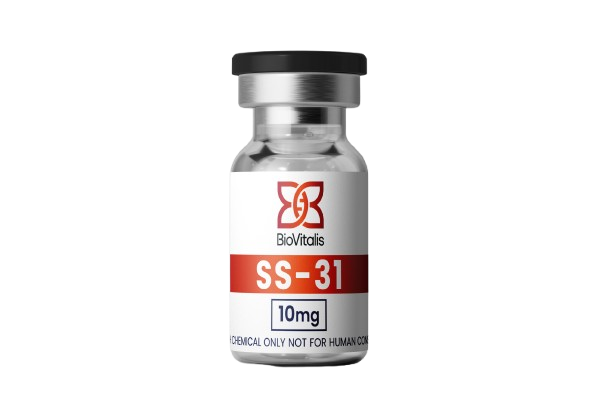
By supporting this company and using my discount code you enable to me to keep writing these, answering your DMs and telling you what I personally research and my clients use…
All my peptides come from BioViatlis.org. They’ve been reliable for me: third-party tested, high-purity, and transparent COAs (certificates of analysis) .
BioVitails Click this link and get 10% applied at checkout.
https://biovitalis.org/?code=cp10

References
Szeto HH. Serendipity and the Discovery of Novel Compounds That Restore Mitochondrial Plasticity (PMC, 2014).
Szeto et al. on cardiolipin binding and mechanism (various papers, e.g., JBC 2020; PNAS 2020).
Stealth BioTherapeutics announcements: FDA accelerated approval of Forzinity (elamipretide) for Barth syndrome (September 2025).
FDA press release: First treatment for Barth syndrome (September 19, 2025).
Community anecdotes: Reddit threads (r/longevity, r/cfs, r/BodyHackGuide, 2025–2026); Innerbody Research guide (2025/2026).
Synergy discussions: Peptide protocol articles (e.g., DrBarx, Tydes, Revital Trichology, 2025) on MOTS-c + SS-31 for biogenesis/protection.
The author is not a doctor, healthcare provider, or medical professional and has no medical qualifications. The author assumes no responsibility or liability whatsoever for any use, misuse, outcome, injury, illness, damage, legal issue, or consequence—direct or indirect—arising from this content.